


Why Laser Therapy Has Become the Go-To Solution for Stubborn Nail Fungus
Does laser work on nail fungus? It’s a common question, as traditional treatments often fail, leaving people frustrated with thick, discolored nails.
Quick Answer:
- Yes, laser therapy works – Studies show 81% to 95.4% success rates in eliminating fungal infections.
- FDA-cleared treatment for temporary improvement in nail clarity.
- Safe and non-invasive with minimal side effects.
- Results take 6-12 months as healthy nails grow out.
- Ideal for those who can’t use oral medications due to health conditions.
Onychomycosis affects 2-10% of the population and accounts for 50% of all nail infections. The fungus hides deep under the nail plate, protected from topical treatments that can’t penetrate effectively.
This is where laser technology excels. Unlike creams or oral medications with potential side effects, laser energy penetrates the nail to target fungal pathogens where they live.
I’m Lital Lev-Ary, a Certified Laser Professional with over 15 years of experience. I’ve seen how laser therapy helps clients at Light Touch Laser Spa achieve clear, healthy nails. When performed correctly, the answer to does laser work on nail fungus is a consistent yes.
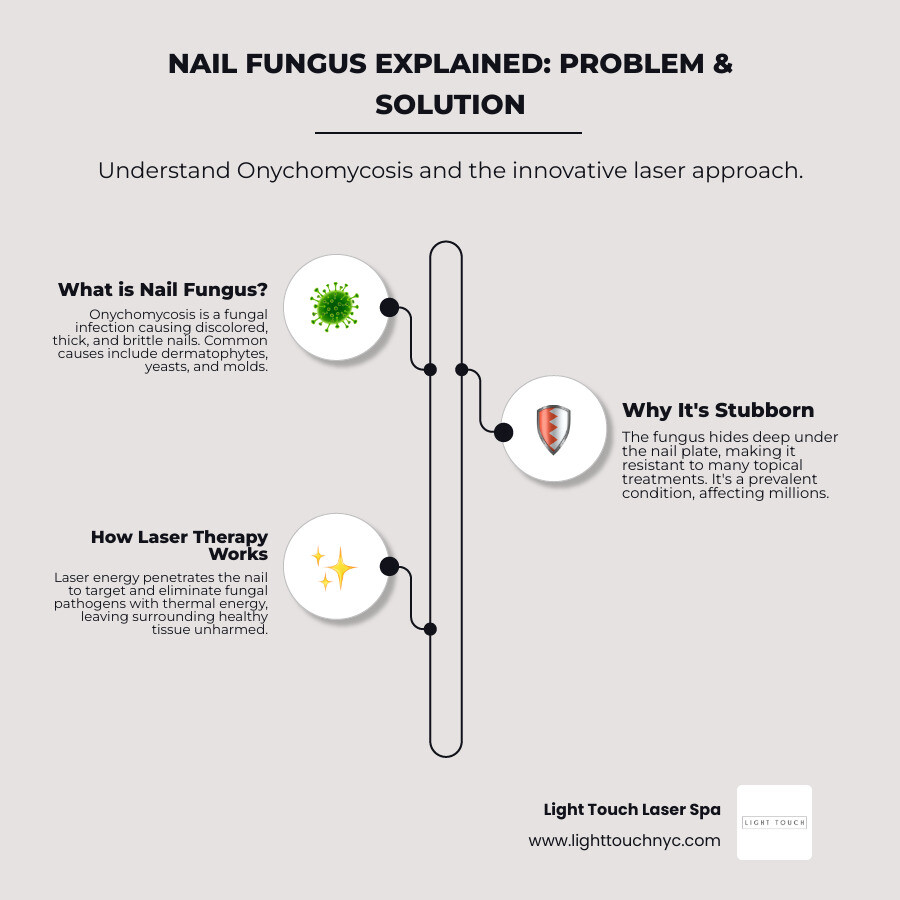
What is Toenail Fungus (Onychomycosis) and Why Is It So Stubborn?
To understand how laser therapy works, let’s first look at our adversary: toenail fungus. Medically known as onychomycosis, this common condition is more than a cosmetic issue; it can lead to discomfort and pain.
This condition is caused by microscopic invaders—primarily dermatophytes, but also yeasts and molds—that thrive in warm, moist, dark environments like shoes and socks. Several factors increase the risk of developing this stubborn infection:
- Age: Older adults have more brittle nails and weaker immune systems.
- Diabetes: Compromised immunity and poor circulation increase susceptibility.
- Poor Circulation: Reduced blood flow impairs the body’s ability to fight infection.
- Nail Trauma: Injuries create an opening for fungi to enter.
- Public Environments: Walking barefoot in gyms, pools, and locker rooms exposes feet to fungi.
- Occlusive Footwear: Tight, non-breathable shoes create an ideal environment for fungal growth.
- Compromised Immune Systems: Conditions like HIV/AIDS or taking immunosuppressant drugs increase risk.
The symptoms of toenail fungus are often unmistakable:
- Discoloration: Nails may turn yellow, white, brown, or black.
- Thickening: The nail plate becomes thicker and difficult to trim.
- Brittleness: Nails can become crumbly or ragged.
- Foul Smell: Debris under the nail can cause an unpleasant odor.
- Distortion: The nail may become misshapen or lift from the nail bed.
- Pain: Severe cases can cause discomfort, especially when wearing shoes.
So, why is onychomycosis so stubborn? The nail plate acts as a formidable barrier, making it extremely difficult for topical creams to penetrate and reach the fungus. While oral medications are more effective, they carry potential systemic side effects. This is precisely where laser therapy offers a distinct advantage. For more details, you can refer to the CDC information on fungal nail infections.
How Laser Therapy Targets and Eliminates Nail Fungus
When people ask “does laser work on nail fungus?” the answer lies in its unique technology. Unlike creams that can’t get through the nail or pills that affect the whole body, laser therapy is a targeted approach.
The science is called selective photothermolysis, meaning the laser targets fungal cells while leaving surrounding tissue unharmed. The laser energy passes through the nail plate and is absorbed by the fungus. This energy converts to heat, raising the temperature within the fungal cells to a level they cannot survive, effectively destroying them.
This precision is what makes laser therapy so effective. It bypasses the nail’s protective barrier to eliminate the fungus at its source, something traditional treatments struggle to do.
The Difference Between Hot and Cold Lasers
There are two main types of lasers used for nail fungus: hot and cold.
Hot lasers, like Nd:YAG systems, use thermal energy to destroy fungal cells. During treatment, patients may feel warmth, tingling, or slight pinprick sensations. While effective, some find it mildly uncomfortable.
Cold lasers work through a photochemical effect rather than heat. At Light Touch Laser Spa, we use advanced cold laser technology that targets fungus and stimulates the body’s natural immune response. This approach is completely painless, with no heat or discomfort.
Both laser types are effective, but we chose cold laser technology to ensure your journey to healthy nails is as comfortable as possible.
What to Expect During a Treatment Session
Your treatment at Light Touch Laser Spa is straightforward and relaxing.
- Consultation: We start with an initial consultation to examine your nails, discuss your medical history, and create a personalized treatment plan.
- Preparation: Before treatment, we perform debridement—carefully trimming and cleaning your nails to remove debris and ensure the laser can reach the fungus.
- Procedure: The treatment itself takes just 15-30 minutes. You’ll relax while our technician applies the cold laser to each affected nail. You won’t feel any sensation of warmth or pinpricks.
- Follow-up: Most people need multiple sessions spaced 4-6 weeks apart for the best results. There is absolutely no downtime, so you can return to your normal activities immediately.
It’s a simple, comfortable process with no pain or recovery time, putting you on the path to clearer nails.
The Big Question: Does Laser Work on Nail Fungus?
So, does laser work on nail fungus? The answer is a resounding yes, backed by scientific evidence.
The research is impressive. Multiple studies report success rates between 81% and 95.4%, showing that laser therapy can achieve complete or significant clearance, even in severe cases where other treatments have failed. In direct comparisons, laser therapy often shows higher cure rates than traditional oral medications.
The FDA has cleared laser devices for the “temporary cosmetic improvement” of nail fungus. This cautious language doesn’t mean the treatment is ineffective; it reflects the medical community’s conservative approach to the word “cure” since fungal infections can recur. In practice, the laser eliminates the active infection, allowing healthy, clear nails to grow back.
Laser therapy addresses the core problem of nail fungus. It bypasses the nail barrier that stops topical creams and avoids the systemic side effects of oral medications by delivering energy directly to the fungus. For those who want to dive deeper, this scientific review on laser therapy effectiveness provides comprehensive clinical evidence.
How effective is laser therapy for nail fungus?
Laser therapy’s effectiveness consistently impresses medical professionals. The majority of patients achieve complete or significant improvement in nail appearance and health.
When compared to other options, the differences are clear:
- Topical treatments have very low success rates (often under 5%) because they can’t penetrate the nail plate.
- Oral antifungal medications have higher cure rates (60-82%) but come with risks of liver damage, kidney problems, and drug interactions. Many patients cannot take them due to health conditions.
Laser therapy offers the effectiveness of systemic treatment without the internal side effects. It’s an ideal solution for patients with diabetes, liver conditions, or those taking multiple medications who cannot risk oral antifungals.
Are there any side effects or risks?
Laser nail fungus treatment is remarkably safe. When performed by certified professionals, serious side effects are virtually non-existent. The technology is FDA-cleared and targets only fungal cells, leaving healthy tissue unharmed.
Most patients experience no side effects. With our cold laser technology, the treatment is completely pain-free. Hot laser systems may cause mild, temporary warmth or tingling. On rare occasions, there might be slight redness around the nail, which fades within a few hours.
This safety profile stands in stark contrast to oral medications, which carry risks of liver and kidney damage. The importance of choosing a certified, experienced technician cannot be overstated, as their expertise ensures both safety and success.
How long until I see clear nails?
Managing expectations on the timeline is key. The laser eliminates the fungus quickly, but seeing clear nails requires patience as your body’s natural growth cycle takes over.
The process is gradual. The laser destroys the infection, but the existing damaged nail must grow out. A new, healthy nail grows from the base, slowly replacing the old, discolored portion.
Toenails grow slowly—about 1mm per month. A completely new toenail can take 12-18 months to grow out. You’ll see the first signs of clear growth at the base within 3-4 months. Significant improvement is often visible in 4-6 months, with full results typically seen in 6-12 months as the old nail is trimmed away.
Every millimeter of new, clear growth is proof that the treatment worked.
Why Choose Laser Therapy for Nail Fungus?
If you’re frustrated with stubborn nail fungus, you’re likely looking for a better alternative to traditional treatments. While topical creams struggle with poor penetration and oral medications carry systemic risks, laser therapy offers a targeted approach that is both effective and safe.
Here’s how laser therapy compares to other options:
| Feature | Topical Creams/Lacquer | Oral Antifungal Medications | Laser Therapy |
|---|---|---|---|
| Effectiveness | Low (less than 5% cure rate); poor penetration | Moderate to High (71-82% mycological cure) | High (81-95.4% mycological cure, comparable to oral meds) |
| Side Effects | Minimal (local irritation) | Systemic (liver damage, kidney issues, drug interactions) | Minimal (temporary warmth, no systemic side effects) |
| Duration of Treatment | Daily application for 6-12+ months; often ongoing | Daily for 6-12 weeks (terbinafine) | Short sessions (12-30 min) over 2 sessions, results over 6-12 months |
| Convenience | Daily adherence required | Daily pill; blood tests needed | Quick in-office sessions; no daily home treatment beyond hygiene |
| Invasiveness | Non-invasive | Systemic (ingested) | Non-invasive (light energy) |
| Suitability | Mild infections only | Not suitable for those with liver/kidney issues, pregnant | Suitable for most, including those with contraindications to oral meds |
The differences are striking. Laser therapy delivers high effectiveness without the systemic risks associated with oral medications.
Benefits of Laser Therapy
Laser therapy is an appealing choice for several reasons:
- Non-Invasive: No needles, incisions, or uncomfortable procedures. Precise light energy targets the fungus beneath your nails.
- No Systemic Side Effects: The laser energy is localized to the nail, avoiding the liver and kidney risks associated with oral medications.
- Zero Downtime: Each session takes just 12-30 minutes, and you can immediately return to your daily activities.
- Suitable for Most Patients: It’s a safe option for many who can’t use other treatments, including the elderly and those with certain health conditions.
- Pain-Free Experience: Our advanced cold laser technology ensures a comfortable, relaxing treatment with no burning or discomfort.
At Light Touch Laser Spa, we’ve seen how laser therapy transforms not just nails, but confidence, especially when other treatments have failed.
Your Guide to a Successful Laser Treatment Journey
Achieving the best results is a team effort. We provide the advanced laser treatment, while your aftercare is key to preventing reinfection. The laser eliminates the current infection, but your daily habits will help you maintain clear, healthy nails for years to come.
Preparing for Your Laser Session and Post-Treatment Care
Proper preparation ensures the laser works effectively, while consistent aftercare prevents the fungus from returning.
Before Your Appointment:
- Remove all nail polish completely, as it can block the laser.
- Wash and dry your feet thoroughly, especially between the toes.
- Trim your nails as short as is comfortable.
- Bring a fresh pair of cotton socks to wear after your treatment.
After Your Treatment:
- Keep your feet dry at all times. Fungus thrives in moisture.
- Choose breathable footwear (leather, canvas) and rotate your shoes daily to allow them to dry.
- Wash socks in hot water and change them daily.
- Wear shower shoes in public places like gyms and pools.
- Use an antifungal spray on your feet and inside your shoes daily.
- Sterilize your nail tools (clippers, files) with rubbing alcohol after each use.
These habits are crucial for preventing reinfection and protecting your results long-term.
What is the Cost of Laser Toenail Fungus Treatment?
Laser nail fungus treatment is typically considered a cosmetic procedure and is not covered by most insurance plans. It’s best to plan for it as an out-of-pocket expense.
Treatment costs generally range from $600 to $1000 per session at reputable medical spas. The final price depends on:
- The number of affected nails.
- The severity of the infection.
Most people need multiple sessions, so many clinics offer package pricing to reduce the per-session cost. During your consultation at Light Touch Laser Spa, we will provide a detailed treatment plan with transparent pricing. This is an investment in your health and confidence, and seeing your clear results will prove it was worth it.
Frequently Asked Questions about Laser Nail Fungus Treatment
When considering a new treatment, it’s normal to have questions. Here are answers to the most common concerns we hear from clients wondering does laser work on nail fungus.
Is laser treatment for nail fungus painful?
At Light Touch Laser Spa, our advanced cold laser technology is completely pain-free. It uses a photochemical process without heat, so you feel no discomfort. You can relax during the session. Other clinics may use hot lasers, which can cause a warming or pinprick sensation, but our method ensures a comfortable experience.
How many laser sessions will I need?
There is no one-size-fits-all answer, as every case is unique. The number of sessions depends on the severity of your infection and how many nails are affected.
- Mild cases may only require a few sessions.
- Most people with moderate to severe infections typically need 3 to 5 sessions spaced about 4 to 6 weeks apart.
- Very stubborn infections may require ongoing treatments until the nail fully grows out.
During your consultation, we will examine your nails and provide a realistic treatment timeline.
Is laser nail fungus treatment safe for everyone?
Laser therapy is very safe for most people and is often the ideal choice for those who cannot take oral antifungal medications due to health concerns.
It is a great option for individuals with liver or kidney conditions, elderly patients, and even children, as it works locally on the nail without affecting the rest of the body. There are no pills, blood tests, or drug interactions to worry about.
However, we take precautions with certain conditions. We generally do not treat pregnant individuals and require a dermatologist’s clearance if there are any concerns about skin cancer in the area. A professional consultation is essential to determine if laser therapy is right for you. Our experts at Light Touch Laser Spa will review your health history to ensure a safe and effective treatment plan.
Conclusion
So, does laser work on nail fungus? The evidence is clear: yes. With clinical success rates from 81% to 95.4%, laser therapy is a proven, game-changing solution for those frustrated by stubborn toenail fungus.
Laser treatment solves the core problem that other treatments can’t. It bypasses the nail barrier to target fungus directly at its source, all without the systemic side effects of oral medications.
The journey to clear nails takes patience. Your toenails grow slowly, about 1mm per month, so it takes time to see the full, healthy nail emerge. However, the gradual improvement is worth the wait.
After treatment, prevention is key. Simple habits like keeping your feet dry, wearing breathable shoes, and using an antifungal spray will protect your results and prevent reinfection.
At Light Touch Laser Spa, we’ve helped countless clients regain their confidence with our advanced, pain-free cold laser technology.
Ready to say goodbye to nail fungus for good? For a professional evaluation and advanced laser nail fungus treatment, book a consultation with the experts at Light Touch Laser Spa. We are here to guide you on your journey to healthy, clear nails.
Learn more about our Nail Fungus Treatment